What Washington's Building Code Actually Requires for Concrete Vapor Barriers (WAC 51-11R-40241)
Concrete moisture-vapor transmission is a code-relevant, technical issue in Washington — not a marketing angle. Here's what the state's own building code addresses, and what a proper moisture-testing process actually looks like.
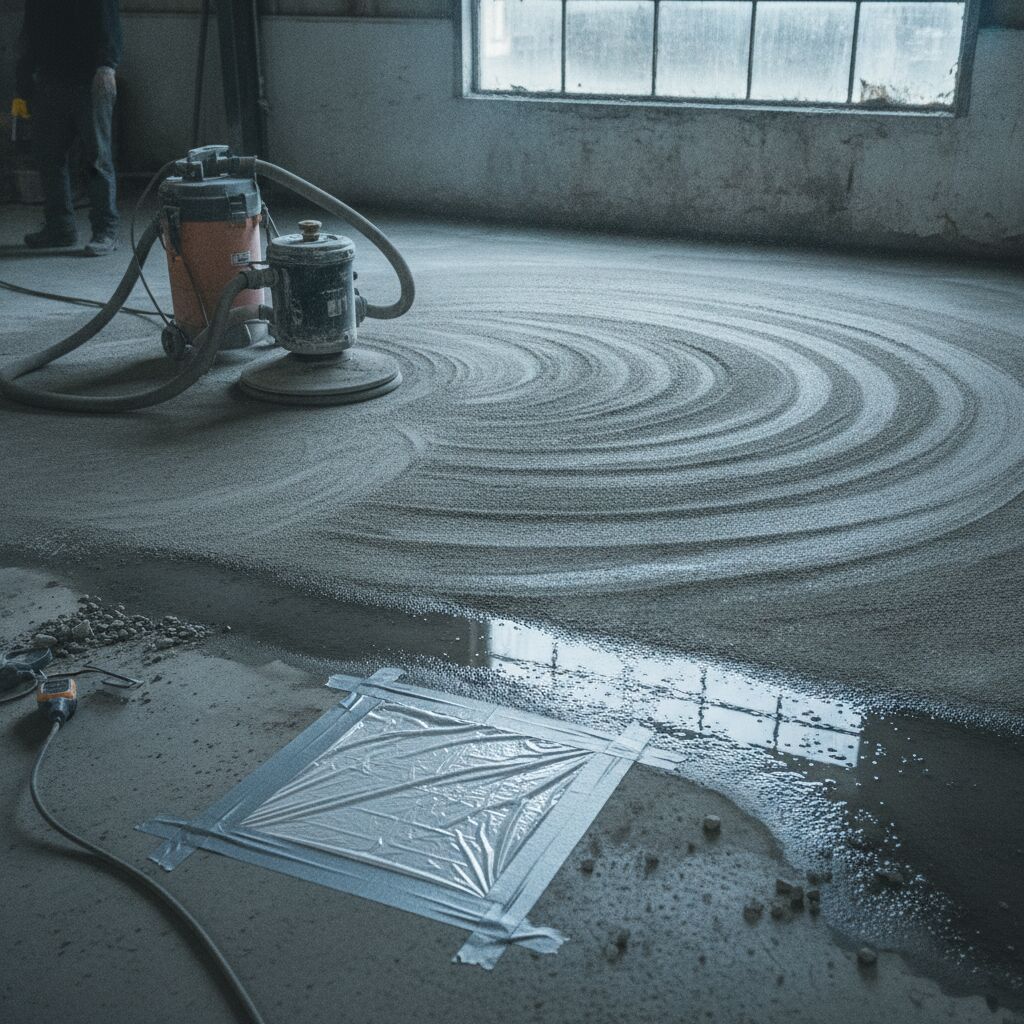
Concrete slabs move moisture. That's true everywhere, in every state, regardless of local climate — it's a function of how concrete cures and how it interacts with the ground beneath it, not primarily a function of regional weather. Washington's own building code addresses this directly, and any installer working on a slab that will be coated, tiled, or finished with a moisture-sensitive flooring system needs to understand what the code requires and why it exists. This is a technical, code-compliance topic — not a seasonal weather story.
What WAC 51-11R-40241 addresses
WAC 51-11R-40241 is part of Washington's state building code language covering concrete slab moisture-related requirements. In plain terms, code sections like this exist because a concrete slab that transmits moisture-vapor at a rate higher than a given flooring or coating system is designed to tolerate can cause that finish to fail — and code requirements around vapor retarders, slab preparation, and moisture testing are meant to catch that risk before it becomes a failed installation. The specific requirements that apply to a given project depend on the building type, the slab design, and the intended floor finish, so it's worth discussing your project's specifics directly with a licensed installer familiar with this section of the code.
Why this is a testing and engineering issue, not a weather issue
It would be easy to assume Washington's concrete moisture requirements exist because of the state's reputation for rain. That's not the mechanism the code is actually built around. Concrete moisture-vapor transmission is primarily driven by the slab's own construction — whether a proper vapor retarder was installed beneath it, how long it was allowed to cure before being covered, the water-to-cement ratio used, and groundwater conditions beneath the slab. A slab in a dry building interior, hundreds of miles from the coast, can still have a serious moisture-vapor-transmission problem if it was built without proper vapor-retarder detailing. Conversely, proper detailing and testing can produce a sound, code-compliant slab regardless of the exterior climate. This is fundamentally a construction-and-testing issue, addressed through engineering practice and code compliance — not a symptom of regional rainfall.
What proper moisture testing actually involves
Before a moisture-sensitive coating goes down on a slab-on-grade floor, a code-aware installer typically evaluates the slab's actual moisture condition using recognized testing methods rather than guessing based on the building's age or location. That process generally includes:
- Assessing the slab's age, prior use, and any known history of coating or finish failures
- Testing relative humidity or moisture-vapor emission at multiple points across the slab, not just a single spot
- Evaluating whether a vapor retarder or vapor-mitigation system is present, and whether it's functioning as designed
- Matching the coating system selection to the slab's actual measured moisture condition, rather than assuming a one-size-fits-all product will work everywhere
Have a slab with a history of coating problems, or a new project that needs code-aware prep?
See our moisture-vapor barrier pageWhat happens when this step gets skipped
Coating blistering, bubbling, and delamination are some of the most common — and most preventable — failures in concrete coating work. In most cases, these symptoms point back to moisture pushing up from within the slab against a coating that either wasn't designed to tolerate that moisture load or was applied without knowing the slab's actual condition in the first place. The failure often doesn't show up immediately; it can take weeks or months to appear, which makes proper testing before installation far cheaper and more reliable than diagnosing and fixing a failed floor after the fact.
Good to know
Moisture testing isn't only relevant to older buildings. Newer slabs that were covered or finished before adequate curing time, or that were built without proper vapor-retarder detailing, can show the same moisture-vapor-transmission issues as much older concrete. Age alone isn't a reliable predictor of whether a slab is ready for a moisture-sensitive coating.Working with a code-aware installer
Whether you're a homeowner dealing with a garage floor that's bubbled before, a builder finishing new construction, or a facility manager responsible for a commercial slab, the same principle applies: proper moisture testing and code-aware installation practices are what stand between a coating that lasts and one that fails within a year or two. Contact us to discuss your project's specific requirements — including whether WAC 51-11R-40241 or related code sections apply to your building type and slab configuration.
Quick answers
What is WAC 51-11R-40241?
It's part of Washington's own state building code addressing moisture-vapor requirements related to concrete slab construction. The specific requirements that apply to your project depend on the building type, slab design, and intended floor finish — a licensed installer familiar with this section can advise on what applies to your specific project. Contact us to discuss your project's requirements.
Do I need moisture testing before every coating job?
Not automatically, but it's a standard, low-cost step worth doing before applying a moisture-sensitive coating system — especially on slab-on-grade concrete, older slabs, or slabs with any prior history of coating failure. It's a small investment relative to the cost of redoing a failed installation.
What happens if a coating is applied without addressing slab moisture?
If a slab is transmitting more moisture-vapor than a given coating system can tolerate, the coating can blister, bubble, or delaminate — sometimes months after a seemingly successful installation. Testing and matching the system to the slab's actual condition up front is the way to avoid that outcome.
Need a code-aware moisture-vapor assessment?
Contact us for a project-specific estimate that accounts for your slab's actual moisture condition. Call 844-967-5247 or get started online.
More from the blog
Marine & Industrial
Why Puget Sound's Salt Air Is Quietly Damaging Untreated Concrete Floors
Read moreGarage Floor Coating
Polyaspartic vs. Epoxy Garage Floor: Which One Actually Holds Up in a Washington Garage?
Read moreCommercial & Tech Campus
Data Centers, Biotech Labs, and Corporate Campuses: Seattle's Flooring Market Most Contractors Ignore
Read more